
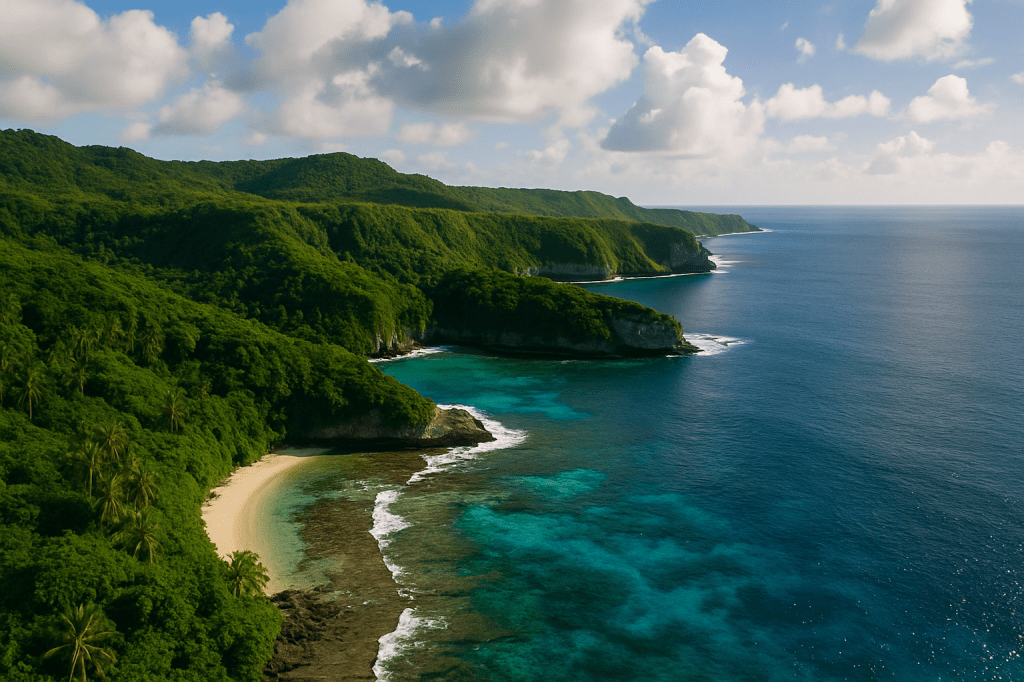
*I realize that there is a much larger US presence in the pacific than just Guam and Hawai‘i. For the sake of the article, I am writing only from my point of view and experiences.
Think of a tropical island and chances are your vision is that of palm trees, sandy beaches, sun, surf, relaxation. The same can be said when describing some of the islands in the pacific such as Guam and Hawai‘i. Despite all that, beneath the surface of these popular islands (Guam a US territory and Hawai‘i a state), lies a more personal and powerful narrative. The people and culture of the islands is built on resilience, tradition, and vibrant self identity.
Let’s explore the cultural treasures of Guam and Hawai‘i, two islands that, despite being thousands of miles apart, they share the same traits of historical, spiritual, and cultural connections.
GUAM: The Heart of the Mariana Islands
Guam, a U.S. territory in the western Pacific, is home to the CHamoru people. A proud and enduring people with a deep culture that dates back more than 4,000 years. The CHamoru were skilled navigators, sailors, and fishermen, long before Spanish contact.
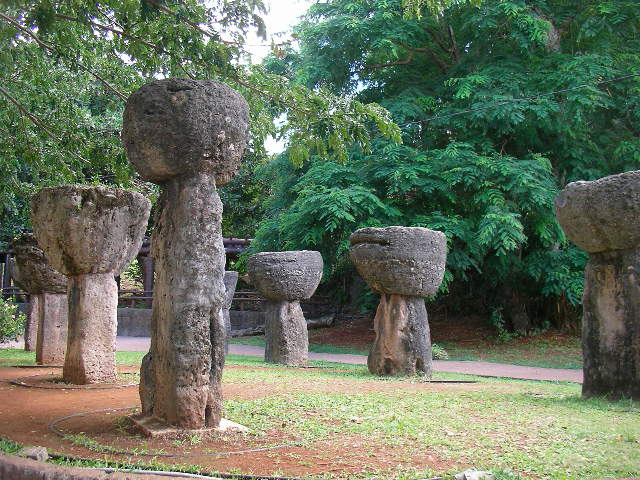
Colonial Impacts
In 1521, Ferdinand Magellan arrived, marking the beginning of centuries of colonization. With Spain ruling Guam for over three centuries, the introduction of the new world with its traditions and language such as Catholicism and Spanish words spread into daily life. Guam would eventually become a US territory soon after the Spanish American War. During World War II, Japan occupied Guam as was much of the Pacific. It was only after the war that Guam was returned to the United States.
Despite these shifts, the CHamoru people have endured and preserved their identity through language, dance, storytelling, and food. Modern Guam is a cultural melting pot, blending Pacific Island roots with influences from American, Spanish, and Asian cultures.
A Living Culture
Festivals like FestPac, and traditional dances like the cha cha, showcase how culture lives on in society. Guam’s youth continue to learn CHamoru in schools along with its traditions and way of life while and families pass down legends while being surround by the ocean, just as their ancestors did.
HAWAI‘I: Islands of Aloha and Ancient Power
The 50th state in the USSA, Hawai‘I is a chain of volcanic islands in the middles of the Pacific Ocean. The islands are filled with powerful traditions and spiritual beliefs rooted in native island culture or Kanaka Maoli.
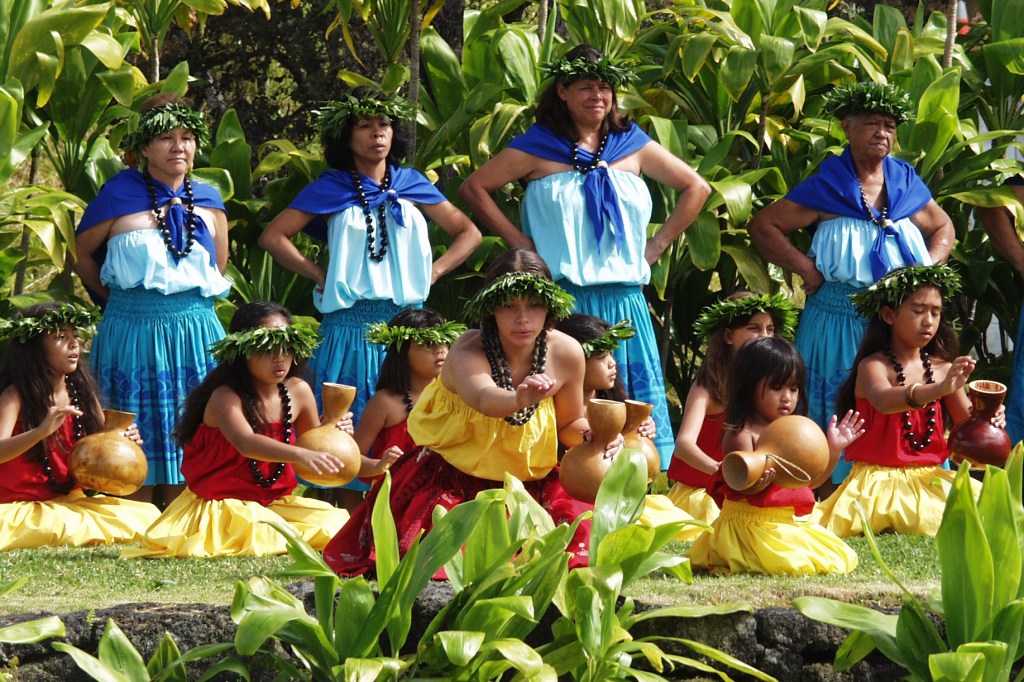
Hula is more than a dance—it’s a sacred way of telling stories.
Kingdom and Colonization
Prior to becoming a U.S. state, The Kingdom of Hawai‘i was a sovereign nation ruled by native monarchs such as the ever popular, Queen Liliʻuokalani. The illegal overthrow of the Hawai‘ian Kingdom in 1893 led to Hawaii being the 50thstate. It is only through the spirit of Hawai‘i its people and its culture that despite this dark chapter in its history, a cultural revival and spirit still lives on today.
Sacred Land and Spirit
In Hawai‘i, the land (ʻāina) is considered to be sacred. Everything around you are alive with spirit. The Volcanoes, oceans, and forests are not just landscapes but also are our living ancestors. Respecting the people and culture also means respecting nature, ancestors, and the mana (spiritual energy) in all things is central to Hawai‘ian way of life.
Language also plays a big role in the blending of the old and new ways. There was once a time when the ʻŌlelo Hawai‘i aka Hawai‘ian language was banned in schools. The push to modernized the islands simply led to a people people steadfast in their belief. Today, the Hawai‘ian language is now making a powerful comeback through immersion schools and public signage.
Shared Struggles, Shared Strength
In the midst of a way of life built on family, culture, and ancestry; the new way of life has burdened Guam and Hawai‘i by colonization, military occupation, and cultural loss. Both have fought to preserve their roots and that fighting spirit still shows in the people. Today, they are leading examples of cultural resilience and an example of what happens to a community when you hold on steadfast in your beliefs in the face of change.
Food, language, music, and ceremony are not just traditions, they are a way of life and in the face of obstacles, they become acts of resistance and love. Whether just the smell of BBQ in Guam or a beautiful hula performed under the moonlight in Hawai‘I; these moments remind us that culture is alive, proud, and evolving.


When visiting visit Guam or Hawai‘i, go beyond the resorts, talk to the locals, visit a cultural center; appreciate the people and the culture altogether. The best way is by attending a village fiesta or a hula performance. They will be more than just a “tourist moment.” They will be your window into the stories of a proud people that deserves to be seen and honored.
Pacific Island cultures are not lost. In Fact, they are rising. The story is far from over.


 One Cultura
Leave a comment