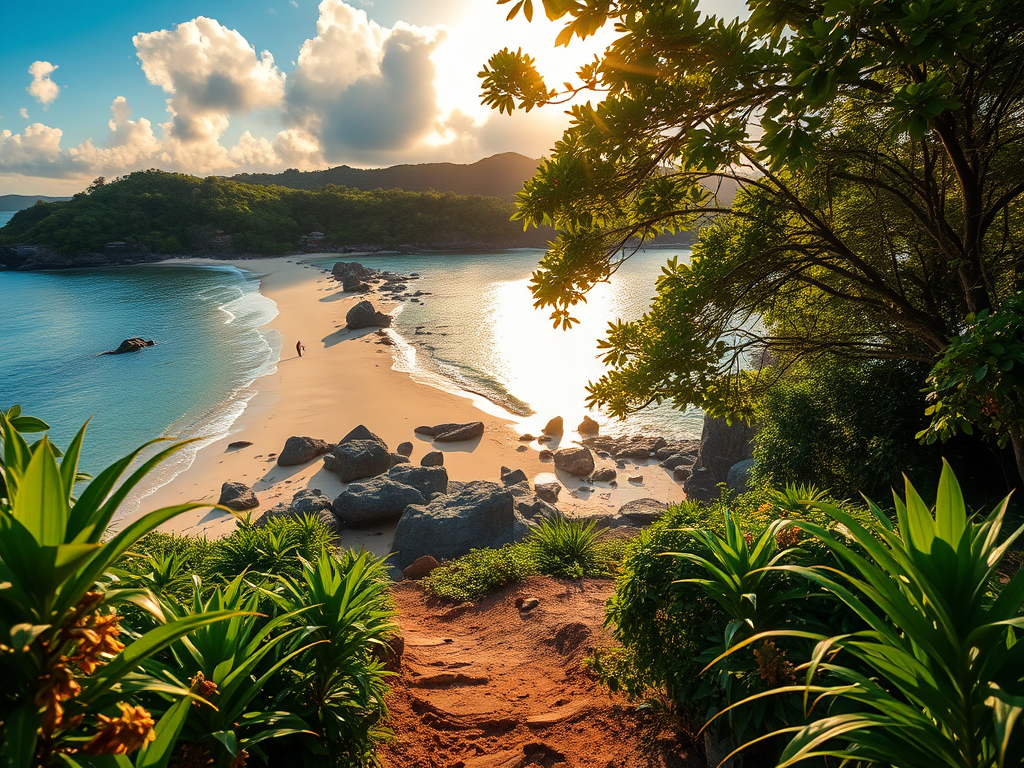
When people hear Guam, they often picture beautiful beaches, blue water and tropical weather.
And yes, Guam has all of that.
But there is another side of the island that deserves just as much attention: its CHamoru culture, history, food, traditions and connection to the Pacific.
If you are visiting Guam or planning your next trip, put down the beach towel for a day and explore some of these places.
Here are seven spots that can help you experience Guam beyond the beaches.
1. Chamorro Village in Hagåtña
Where: Paseo Loop, Hagåtña, Guam 96910
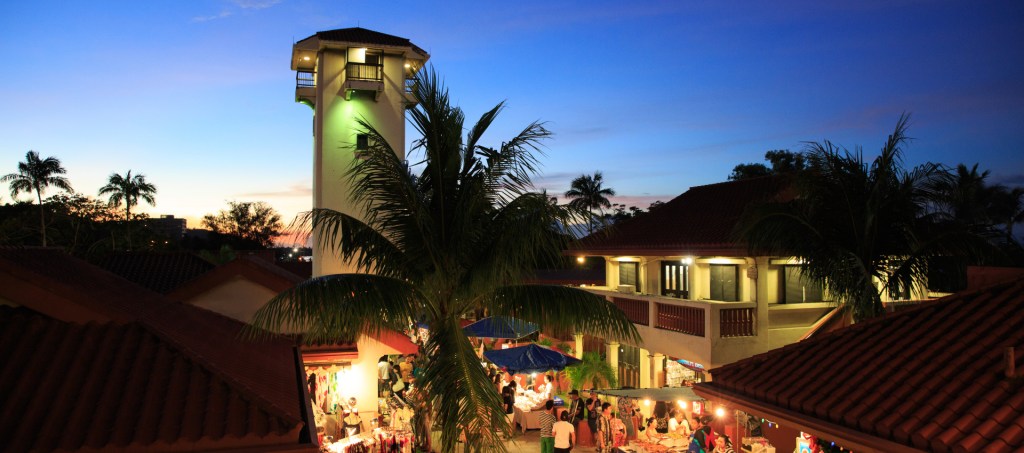
Start in Guam’s capital at Chamorro Village.
This is a great place to experience local food, crafts, entertainment and community. The village is particularly popular for its Wednesday Night Market, where visitors can find local dishes, fresh produce, handmade products and cultural performances.
If you want to experience Guam through food and community rather than simply sightseeing, this should be on your list.
2. Guam Museum in Hagåtña
Where: 193 Chalan Santo Papa, Hagåtña, Guam 96910
For anyone who wants to understand Guam, the Guam Museum is an important stop.
Its permanent exhibition explores the history and culture of the CHamoru people, from ancient settlement through Guam’s more recent history.
The museum uses artifacts, photographs, films and interactive displays to tell Guam’s story.
Give yourself time here. Understanding the island’s history can completely change the way you experience the rest of your trip.
3. Latte Stone Park – Hagåtña
Where: Behind Plaza de España, Hagåtña
You don’t have to spend money to experience one of Guam’s most recognizable cultural symbols.
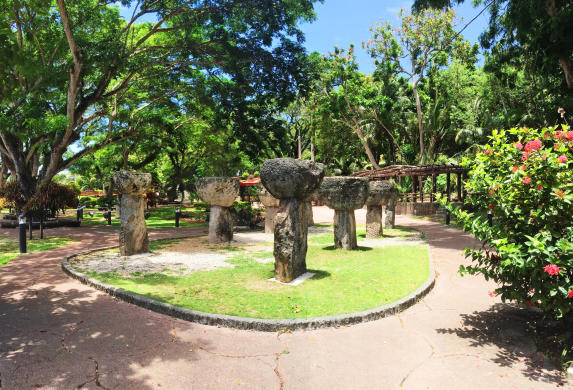
Latte Stone Park features a preserved set of latte stones associated with the ancient CHamoru people.
These distinctive stone pillars are one of the strongest visual symbols of CHamoru identity.
It is also conveniently located near the Guam Museum and Plaza de España, making it easy to combine several historical stops in one visit.
4. T. Stell Newman Visitor Center in Piti
Where: Near the entrance to Naval Base Guam, Piti
Guam’s World War II history is impossible to separate from its modern identity.
At the T. Stell Newman Visitor Center, visitors can learn about Guam’s role during World War II, including the Japanese occupation and the 1944 liberation.
The center includes exhibits and audiovisual programs explaining the experiences of Guam’s people and the military events that took place on the island.
The visitor center is currently listed as open seven days a week, 9:00 AM–4:30 PM, but check before visiting.
5. Fish Eye Marine Park – Piti
Where: 818 N Marine Corps Drive, Piti, Guam 96915
Guam’s culture is deeply connected to the ocean, so experiencing the island also means experiencing its marine environment.
At Fish Eye Marine Park, visitors can explore Guam’s underwater world without having to scuba dive. The park’s underwater observatory provides views of coral and tropical marine life.
It is a different way to appreciate the Pacific that surrounds Guam—and a great option for families.
6. Fort Nuestra Señora de la Soledad in Humåtak
Where: 7MW6+22J, Route 2, Humåtak, Guam
Drive south to Fort Nuestra Señora de la Soledad, overlooking Umatac Bay.
Built by the Spanish between 1802 and 1819, the fort was part of Guam’s defenses during the era of the Spanish galleon trade.
Today, visitors can see preserved features and cannons while taking in dramatic views of Umatac Bay and the southern coastline.
This is history with a view.
7. Inarajan Pools in Inalåhan
Where: Along the main road near the Inarajan village church, Inarajan, Guam
Finish your cultural road trip in southern Guam at Inarajan Pools.
These natural seawater pools are located near the historic village of Inarajan and have long been a popular place for residents and visitors.
Bring a swimsuit, but don’t forget to look around.
The surrounding area gives you a chance to experience one of Guam’s historic southern communities while enjoying the natural environment.
Guam Is More Than a Vacation
The best way to experience Guam is to look beyond the postcard.
Visit the museum. Eat local food. Learn about the CHamoru people. Walk through historic sites. Listen to the stories behind the places you visit.
Then go to the beach.
Because Guam isn’t simply a tropical destination.
It is a place with a history, a culture and a living community—and that’s what makes the island worth exploring.









Leave a comment